Wu Xing · 五行
The Chinese Five Elements
Wood, Fire, Earth, Metal, and Water form a traditional framework for describing change, relationship, and recurring patterns. Here they are introduced as cultural symbolism—not science or prediction.
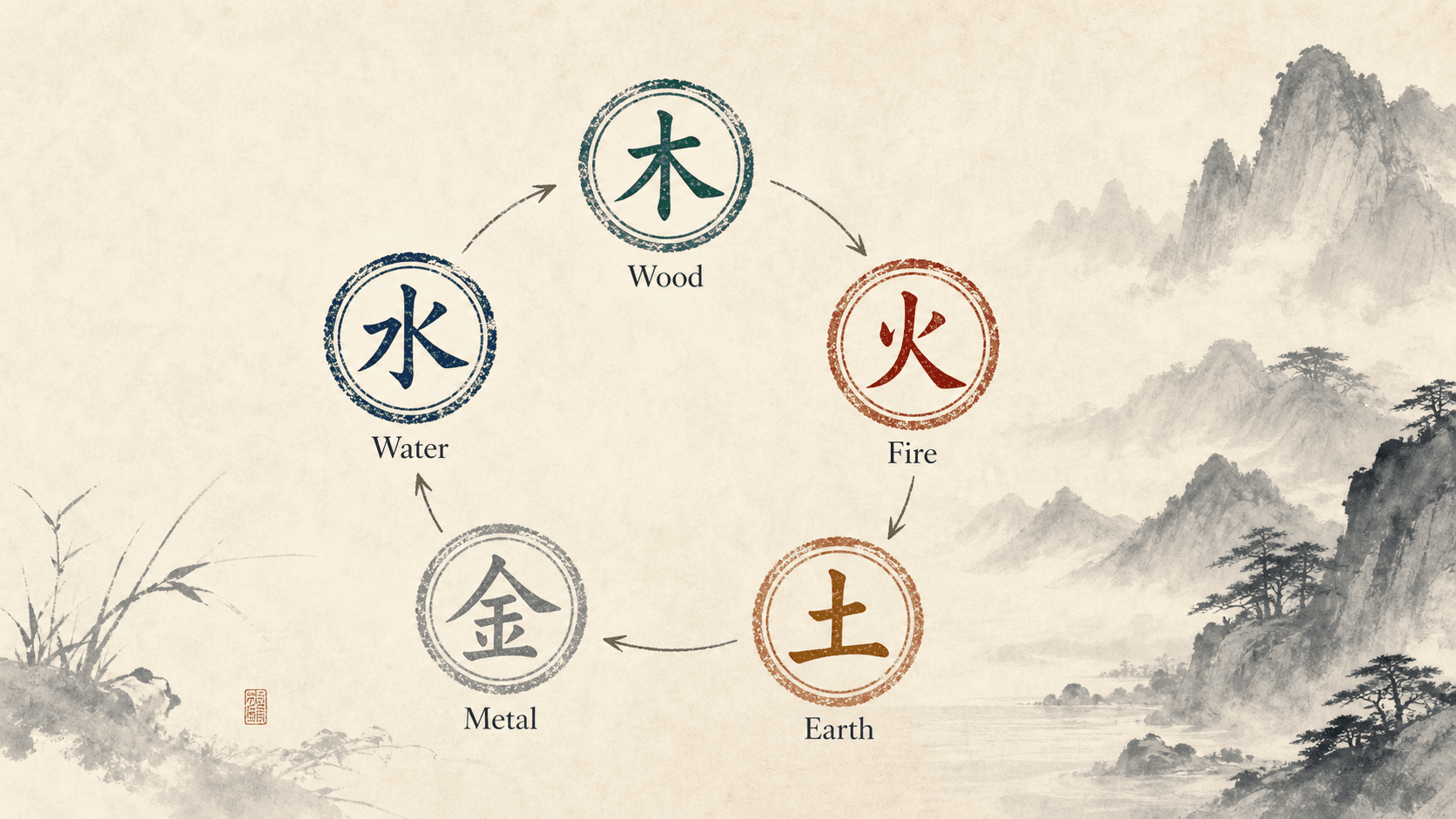
Five symbolic movements
Explore each element
Wood
Wood is the Five Elements image of growth: roots establishing a base, branches finding light, and living systems adapting without losing direction.
growth · renewal · flexibilityFire
Fire represents warmth, illumination, and energy becoming visible. Its symbolic language can describe the moment an idea is shared, a connection is made, or action gathers momentum.
warmth · visibility · expressionEarth
Earth represents grounding, nourishment, and the structures that make change usable. It is the image of a centre that can hold activity without becoming rigid.
stability · care · practical supportMetal
Metal represents form, discernment, and the strength created by refinement. Its image can describe a clear edge, a durable standard, or the decision to remove what no longer serves the whole.
clarity · boundaries · refinementWater
Water represents depth, continuity, and a form of strength that adapts to changing conditions. It can be still enough to reflect and persistent enough to find a path.
adaptation · depth · continuityRelationship, not ranking
The elements describe movement through a cycle
Traditional Wu Xing thought describes generating and regulating relationships among five phases. No element is universally “best,” and a simplified web guide cannot replace historical or scholarly context.
When an element is paired with a zodiac animal, it offers a second symbolic lens. The pairing can support reflection, but it cannot prove traits, compatibility, or future outcomes.
Free cultural preview
Discover your zodiac animal and element
An exact birth date helps account for Lunar New Year. The preview needs no payment details.